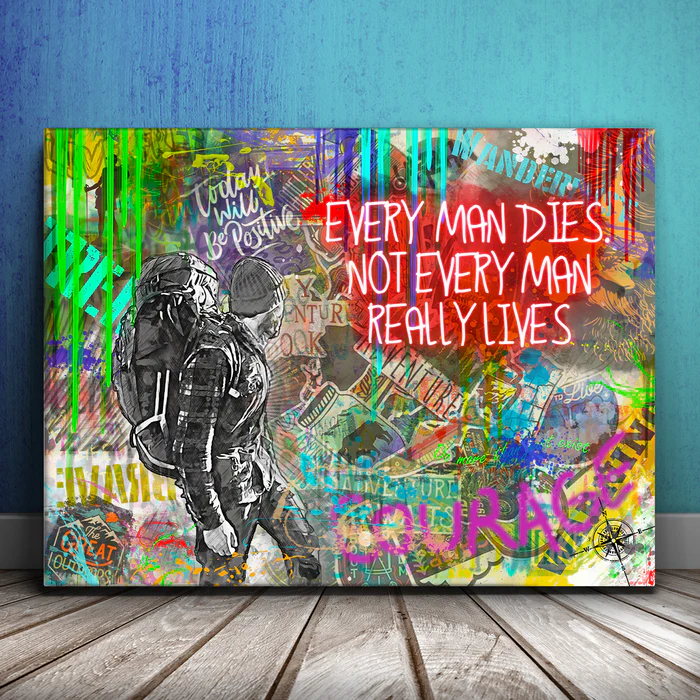
Graffiti has come a long way from being dismissed as vandalism to being recognized as a legitimate art form. Originating from ancient cave paintings and evolving through urban subcultures, graffiti now stands as a dynamic expression of creativity and social commentary.
Early Beginnings
- Ancient civilizations, such as the Egyptians and Romans, used graffiti for communication and storytelling.
- The modern graffiti movement began in the late 1960s and early 1970s, particularly in New York City.
- Artists like TAKI 183 and CORNBREAD pioneered street tagging, marking the birth of modern graffiti culture.
Graffiti as a Cultural Phenomenon
- In the 1980s, graffiti became intertwined with hip-hop culture.
- Artists like Jean-Michel Basquiat and Keith Haring transitioned from street art to galleries.
- Today, graffiti is recognized globally, with dedicated festivals, museum exhibits, and commercial collaborations.
Different Styles of Graffiti Art
Graffiti is diverse, ranging from simple tags to intricate murals. Each style carries its own significance and technique.
Tagging
- The most basic form of graffiti, involving quick signatures or initials.
- Often used for self-promotion and territory marking.
Throw-ups
- More developed than tags but still relatively simple.
- Typically feature bubble letters with one or two colors for quick execution.
Wildstyle
- Complex and intricate lettering, often difficult to read.
- Requires skill and practice, making it a respected style in the graffiti community.
Stencil Art
- Popularized by artists like Banksy, stenciling allows for detailed and repeatable designs.
- Often used for political and social commentary.
Mural Graffiti
- Large-scale paintings with detailed imagery and messages.
- Requires extensive planning, technique, and sometimes legal permission.
The Impact of Graffiti on Urban Spaces
Cool graffiti art transforms dull city walls into vibrant canvases, bringing life to public spaces. While some view it as an eyesore, others appreciate its cultural and aesthetic value.
Positive Influence
- Beautification: Well-executed graffiti enhances cityscapes and reduces urban decay.
- Cultural Expression: Artists use graffiti to share messages about identity, politics, and social issues.
- Tourism and Economy: Famous graffiti locations attract visitors and boost local businesses.
Controversies and Legal Challenges
- Vandalism Laws: Many cities impose strict penalties for unauthorized graffiti.
- Property Rights: Debate exists over whether graffiti is a public right or an invasion of private space.
- Graffiti Removal Costs: Some municipalities spend millions annually on graffiti cleanup.
Famous Graffiti Artists and Their Influence
Several graffiti artists have left a lasting mark on the art world, elevating street art to new heights.
Banksy
- Anonymous UK-based artist known for politically charged stenciled artwork.
- Pieces often carry anti-establishment themes and social commentary.
- His work has been sold for millions at prestigious art auctions.
Jean-Michel Basquiat
- Started as a graffiti artist in New York under the tag “SAMO.”
- Transitioned into contemporary art, blending graffiti with abstract expressionism.
- His work is now celebrated in major galleries worldwide.
Shepard Fairey
- Creator of the “Obey” brand and the iconic Barack Obama “Hope” poster.
- Uses stencil techniques to spread political and social messages.
How to Create Your Own Graffiti Art
If you are inspired to start your own graffiti journey, here are some steps to guide you:
Gathering Materials
- Spray paint in various colors.
- Stencils or sketchbooks for planning designs.
- Protective gear like gloves and masks.
- Legal permission or designated spaces for practice.
Practicing Techniques
- Start with tagging and simple lettering to develop control.
- Experiment with shading and color blending.
- Study different graffiti styles and try to replicate them.
Finding the Right Space
- Look for legal graffiti walls in your city.
- Participate in graffiti art events and collaborations.
- Approach businesses that may allow murals on their walls.
The Future of Graffiti Art
Graffiti continues to evolve, incorporating digital technology and new mediums. Augmented reality (AR) graffiti and interactive murals are becoming more common, pushing the boundaries of street art. Additionally, mainstream acceptance is growing, with more cities embracing graffiti as a form of public art rather than just an act of defiance.
Conclusion
Graffiti is a powerful art form that has shaped urban culture worldwide. Whether viewed as an act of rebellion or a mode of artistic expression, it continues to influence contemporary art, fashion, and social movements. As more people appreciate its value, graffiti is likely to remain a vibrant and evolving force in the creative world.
